



































Agentic AI in Data Science 2026: How Autonomous Agents Are Redefining Analytics & Workflows
Agentic AI is exploding as the #1 trending topic in data science for 2026. Learn how autonomous agents are moving from hype to production, delivering real-time insights, autonomous workflows, and multi-step decision making without constant human oversight.

In early 2026, data teams are no longer just querying databases or building models — they’re orchestrating fleets of intelligent agents that do the work for them. Welcome to the era of Agentic AI — the hottest trend dominating Google searches, industry reports from MIT Sloan, TDWI, Gartner, and every major data summit right now.
What Exactly Is Agentic AI in Data Science?
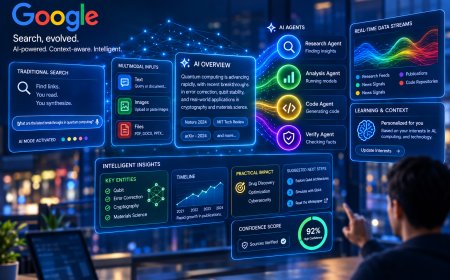
Unlike traditional ML models or even generative AI chatbots that respond to one-off prompts, agentic AI systems are autonomous, goal-oriented entities. They can:
- Perceive new data in real time
- Reason through complex, multi-step problems
- Plan their own workflows
- Use tools (APIs, databases, code interpreters)
- Act, learn from outcomes, and iterate — all with minimal human input
Think of it as upgrading your data pipeline from a static script to a self-driving team of digital colleagues.
Why Agentic AI Is Trending So Hard in 2026
According to recent analyses from MIT Sloan, TDWI predictions, and the Nordic Data Science Summit, three forces are colliding:
- Maturing LLM Capabilities — Models now support reliable tool-use, long-context reasoning, and memory.
- Agent-Ready Data Foundations — Organizations have finally invested in clean, governed, real-time data layers (the “agent-ready data” trend).
- Business Demand for Speed — In a world of instant decisions, waiting for a data scientist to manually investigate anomalies is no longer acceptable.
Real-world early adopters are already seeing 3-5x faster insight generation, automated root-cause analysis, and even self-healing data pipelines.
Real Impact on Data Scientists & Teams
- Data Scientists shift from routine coding and dashboard building to high-value orchestration, prompt strategy, and ethical oversight.
- Analytics teams gain “agentic analytics” — dashboards that don’t just show problems but proactively fix them.
- Enterprises move from experimentation to production deployment of multi-agent systems (one agent cleans data, another builds models, a third validates and deploys).
How to Get Started with Agentic AI Today
- Master the Core Stack — LangChain/LlamaIndex, AutoGen, CrewAI, or open-source frameworks like AutoGPT.
- Build Agent-Ready Data — Focus on real-time pipelines, high-quality metadata, and strong governance.
- Develop New Skills — Advanced prompt engineering for agents, evaluation of agent performance, and hybrid human-AI workflows.
- Start Small — Build your first agent for a repetitive task (e.g., anomaly detection + root-cause report + alert).
Pro Tip: Small language models (SLMs) optimized for agentic tasks are also surging — faster, cheaper, and more private than giant LLMs.
The Road Ahead (and the Challenges)
While the excitement is real, success in 2026 will depend on responsible implementation: robust AI governance, transparency in agent decisions, and maintaining human oversight for high-stakes domains.
The data scientists who thrive won’t be the ones who fear agents — they’ll be the ones who build and lead them.
What's Your Reaction?
 Like
0
Like
0
 Dislike
0
Dislike
0
 Love
0
Love
0
 Funny
0
Funny
0
 Angry
0
Angry
0
 Sad
0
Sad
0
 Wow
0
Wow
0