


































The Metaverse Revolution 2026: How AR, VR & Spatial Computing Are Reshaping Our Reality
Explore the biggest Metaverse, AR, and VR trends dominating 2026. Discover spatial computing, AI-powered experiences, enterprise adoption, smart glasses, and how these technologies are transforming industries like healthcare, education, retail, and entertainment. Stay ahead in the immersive future!
The Dawn of a New Reality: Metaverse, AR & VR in 2026
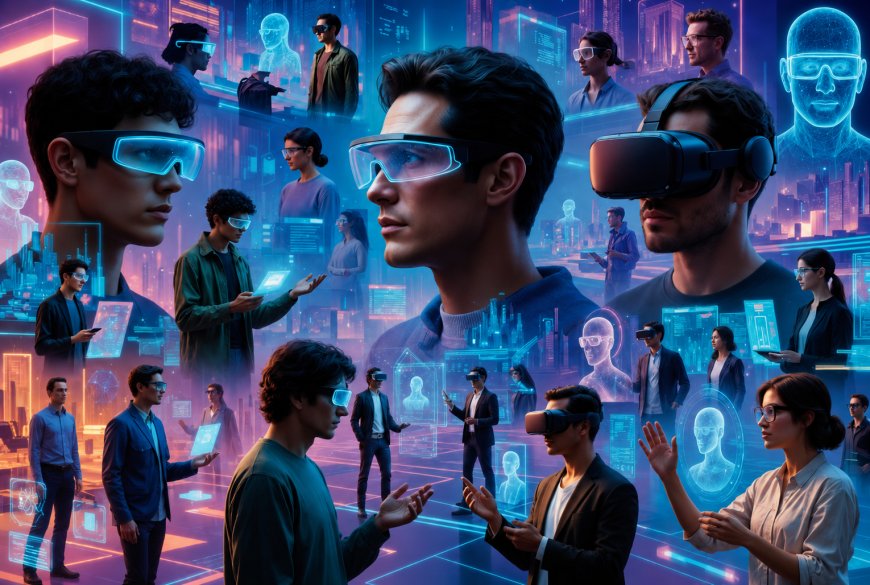
In 2026, the lines between physical and digital worlds are blurring faster than ever. Metaverse, Augmented Reality (AR), Virtual Reality (VR), and Extended Reality (XR) are no longer futuristic buzzwords — they're mainstream technologies driving innovation across every sector. Google Trends and industry reports confirm a massive surge in interest around spatial computing, AI-enhanced immersive experiences, and lightweight AR glasses.
Why It's Trending Right Now
- Spatial Computing Takes Center Stage: Devices and platforms now understand and interact with 3D space in real-time, merging real and virtual environments seamlessly. Think Apple Vision Pro successors, Meta Quest advancements, and Android XR glasses.
- AI + XR Convergence: Generative AI creates hyper-realistic worlds, avatars, and personalized experiences on the fly. Physical AI and digital twins are powering everything from training simulations to virtual collaboration.
- Enterprise Boom & Consumer Shift: Healthcare (surgical training), education (interactive 3D learning), retail (try-before-you-buy AR), and entertainment (immersive events) are leading adoption. Smart glasses weighing under 40g with MicroLED displays are making AR everyday wearable tech.
- WebXR & Accessibility: No heavy headsets needed — browser-based AR/VR experiences are exploding, lowering barriers for businesses and users alike.
The Metaverse isn't dead; it's evolving into something more practical and powerful — a persistent, interconnected digital ecosystem enhanced by AR/VR.
Key Benefits & Use Cases
- Education: Students explore ancient Rome or molecular structures in 3D.
- Work: Remote teams collaborate in shared virtual offices with spatial awareness.
- Healthcare: AR overlays during surgery and VR for pain management/therapy.
- Retail & Entertainment: Virtual try-ons, concerts, and shopping malls in the Metaverse.
Challenges Remain: Privacy, high-end hardware costs, and content creation — but rapid advancements in 5G, edge computing, and AI are solving them quickly.
The Future is Immersive. Whether you're a developer, business leader, or tech enthusiast, 2026 is the year to dive into Metaverse, AR, and VR technologies.
Industry Transformations
1. Healthcare Surgeons use AR overlays for precise navigation during complex operations. VR therapy helps patients manage chronic pain, PTSD, and phobias with measurable clinical results. Medical students dissect virtual cadavers and practice procedures risk-free.
2. Education & Training Interactive 3D lessons make abstract concepts tangible. History students walk through ancient civilizations, while engineering students manipulate complex machinery in safe virtual environments. Remote learning becomes truly engaging and collaborative.
3. Retail & E-commerce Virtual try-on experiences for fashion, furniture, and cars have dramatically reduced return rates. Brands host immersive Metaverse pop-up stores and events that blend physical and digital shopping.
4. Workplace & Collaboration Hybrid teams meet in persistent virtual offices where spatial audio and gestures create presence that video calls simply can’t match. Architects review full-scale building models together in real-time.
5. Entertainment & Social Concerts, sports events, and social gatherings in the Metaverse attract millions. Avatars with realistic expressions and emotions create deeper connections than traditional social media.
Challenges and the Road Ahead
Despite the progress, issues remain:
- Interoperability between different Metaverse platforms.
- Privacy and data security in always-on immersive environments.
- Digital fatigue and the need for ergonomic, lightweight devices.
- Content creation — though AI tools are rapidly lowering this barrier.
Advancements in 5G/6G, edge computing, and battery technology are addressing many of these hurdles faster than expected.
How to Get Started in 2026
Whether you're an individual, creator, or business:
- Experiment with consumer devices like Meta Quest 3S or upcoming AR glasses.
- Explore no-code WebXR platforms to create browser-based AR experiences.
- Invest in enterprise solutions for training and collaboration.
- Follow key developments in spatial AI and open standards.
The future is not just digital — it’s spatial, immersive, and deeply personal.
The Metaverse, AR, and VR revolution is redefining how we work, learn, shop, heal, and connect. 2026 marks the year these technologies transition from early adopters to mainstream transformation.
What's Your Reaction?
 Like
0
Like
0
 Dislike
0
Dislike
0
 Love
0
Love
0
 Funny
0
Funny
0
 Angry
0
Angry
0
 Sad
0
Sad
0
 Wow
0
Wow
0