
































Nepal Floods 2026: Death Toll Surges Past 350 as Rescuers Hunt for Over 1,000 Missing After Himalayan Glacial Collapse
Nepal Floods 2026 Live Updates: 359 Dead, 1,000+ Missing After Glacial Avalanche Triggers Catastrophic Flash Floods
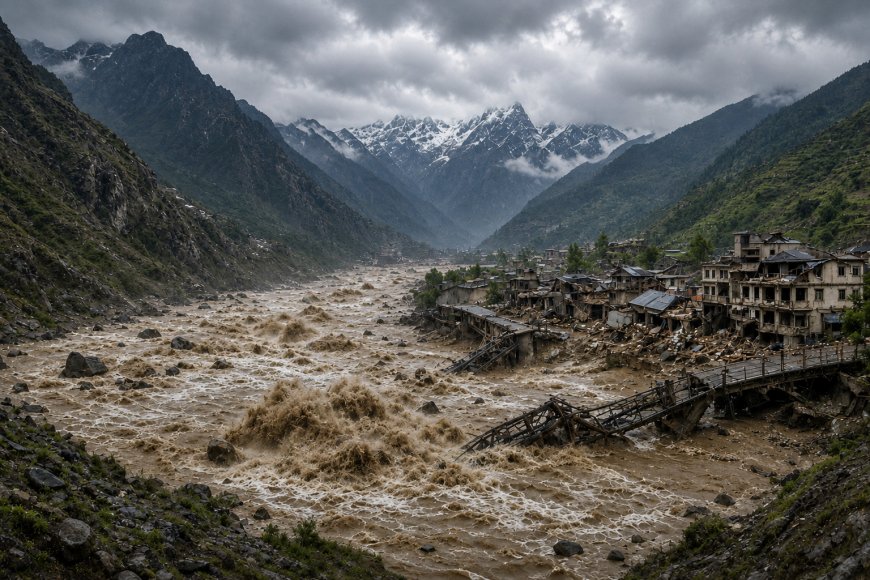
Tragedy has struck the Himalayas. On the morning of 26 August 2026, a massive wall of ice, rock and mud collapsed high in the mountains near the Nepal-Tibet border, crashing into the Lhende Khola tributary of the Bhote Koshi River. The resulting flash flood roared through steep valleys at terrifying speed, sweeping away villages, bridges, roads and hydropower plants in a matter of minutes.
By the evening of 27 August, Nepal Police confirmed the death toll had climbed to at least 359. More than 1,000 people remain missing across Nepal and China’s Tibet region, including hundreds of foreign tourists and pilgrims. The hardest-hit areas include Rasuwa, Nuwakot, Trishuli and downstream districts such as Chitwan and Nawalparasi East, where bodies continue to be recovered from the plains.
Among the missing are travellers from more than two dozen countries — large numbers of Indian pilgrims headed for Mount Kailash, as well as citizens from the United States, Australia, Britain, Canada, Malaysia and elsewhere. Rescue teams have already located around 100 Indian visitors and 25 Chinese workers, but the search continues under extremely difficult conditions. Over 5,000 army and police personnel, supported by helicopters dropping food, tents and medical supplies (including aid from India), are working around the clock.
The disaster has crippled critical infrastructure: dozens of motorable and suspension bridges destroyed, long stretches of the key road linking Kathmandu to Tibet washed away, and hundreds of megawatts of hydropower capacity knocked offline. A new barrier lake has formed upstream, raising fears of a secondary flood in the coming days.
On the morning of 26 August 2026, the Himalayas unleashed one of the most catastrophic natural disasters Nepal has seen in recent memory. High in the remote mountains near the Nepal-Tibet border, a massive section of glacier and rock collapsed without warning. The enormous wall of ice, mud, boulders and debris thundered down the steep slopes and crashed into the Lhende Khola, a tributary of the Bhote Koshi River. Within minutes, a tsunami-like surge of water and debris raced through the narrow valleys at speeds estimated around 50 metres per second, destroying everything in its path.
By the evening of 27 August 2026, the confirmed death toll in Nepal had climbed to at least 359, according to Nepal Police updates. More than 1,000 people remained missing across Nepal and China’s Tibet Autonomous Region. The true scale of the tragedy is still unfolding as rescue teams continue to comb through mud-covered valleys, collapsed buildings and debris-strewn riverbanks.
The worst-hit districts include Rasuwa, Nuwakot, and the Trishuli valley, with significant impact further downstream in Dhading, Gorkha, Chitwan, Tanahun and Nawalparasi East. Entire stretches of the vital road connecting Kathmandu to the Tibetan border were washed away. Dozens of motorable bridges and suspension bridges were swept downstream. Multi-storey buildings collapsed or were buried under thick layers of mud. Hydropower projects with a combined capacity of several hundred megawatts were severely damaged, cutting power supplies across parts of the country.
Among the missing are hundreds of foreign nationals from more than two dozen countries. Indian pilgrims travelling for the sacred Kailash Mansarovar Yatra form the largest group, followed by travellers from the United States, Australia, the United Kingdom, Canada, Malaysia and other nations. Some 100 Indian visitors and 25 Chinese workers have since been located by rescue teams, but many families are still waiting for any news of their loved ones.
Over 5,000 personnel from the Nepal Army, Nepal Police and Armed Police Force have been deployed. Helicopters are flying continuous sorties, dropping food packets, tents, medical supplies and other essential relief materials to communities cut off by the destruction of roads and bridges. India has provided urgent humanitarian assistance, while Chinese authorities are conducting parallel search operations on the Tibetan side of the border, where more than 500 people are also reported missing.
A new and dangerous threat has emerged: a large barrier lake has formed upstream due to the massive debris blockage. Chinese water authorities have warned of a high risk of the lake breaching in the coming days, which could trigger a secondary flood wave downstream. Continuous monitoring and precautionary measures are underway.
Nepal’s Prime Minister Balendra Shah visited the affected areas to assess the situation and coordinate relief efforts. Hospitals in Kathmandu and nearby districts are receiving bodies recovered from the plains, while anxious families gather outside medical facilities and temporary relief camps, hoping for positive news.
This disaster highlights the growing vulnerability of the Himalayan region to glacial instability and extreme weather events linked to climate change. The combination of a glacial collapse, monsoon rains, and the steep topography of the valleys created a perfect storm of destruction that left almost no time for warning or evacuation.
As search and rescue operations continue into the night and the days ahead, the nation stands united in grief and determination. Every effort is being focused on locating survivors, recovering the missing, supporting the injured and displaced, and preventing further loss of life from secondary risks.
The people of Nepal, and the families of all those still unaccounted for around the world, need continued support, accurate information, and collective strength during this difficult time.
Nepal’s Prime Minister has visited affected zones, while Chinese Premier Li inspected the Tibet side. Families wait anxiously at hospitals and relief centres, hoping for news of loved ones. Authorities urge the public to avoid rumour-driven donation scams and rely on official channels.
This is one of the deadliest Himalayan disasters in recent years — a stark reminder of the growing risks from glacial instability in a warming climate. Search and rescue operations remain the top priority as the nation mourns and fights to save every possible life.
Stay updated with verified sources. Our thoughts are with the people of Nepal and all those still unaccounted for.
What's Your Reaction?
 Like
0
Like
0
 Dislike
0
Dislike
0
 Love
0
Love
0
 Funny
0
Funny
0
 Angry
0
Angry
0
 Sad
0
Sad
0
 Wow
0
Wow
0