

































India Monsoon 2026 Crisis Deepens: Below-Average September Rainfall Sparks Major Agricultural Worries
India Monsoon 2026 September Rainfall Deficit – Agriculture Alert & Latest IMD Updates
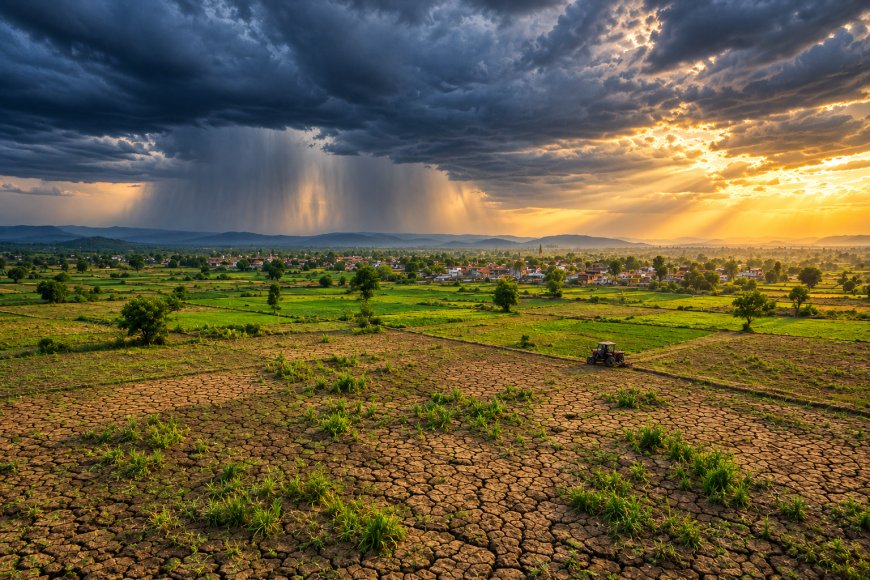
India’s 2026 southwest monsoon is closing with growing anxiety across farming communities, markets, and policymakers. As of mid-September (data up to around 12–14 September), cumulative rainfall from 1 June stands approximately 15% below the long-period average — roughly 662 mm received against a normal of about 779 mm. The India Meteorological Department (IMD) had already warned that September, the final month of the season, would most likely deliver below-normal rainfall (less than 91% of the long-period average of ~167.9 mm). Early September itself opened with a sharp 26% deficit in the first nine days, and while scattered heavy showers have since arrived in pockets of Gujarat, Chandigarh, Maharashtra, Vidarbha, and the northeast, the overall shortfall remains stubborn.
The season has been uneven from the start. June opened with a deficit near 35%, July brought some recovery with near-normal rains, but August turned dry and record-warm — the hottest August since 1901, with mean temperatures around 28.01°C. Nearly half of India’s districts (around 45–47%) have recorded deficient or large-deficient rainfall. South peninsular India and the east/northeast regions show the steepest shortfalls (often 24–28%), while northwest India is about 10% deficient and central India has stayed closer to normal. Crisil’s Rainfall Distortion Index even flagged 2026 as the most spatially distorted monsoon in a decade.
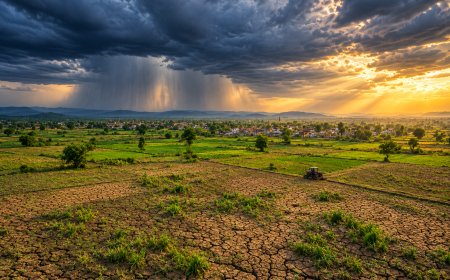
For agriculture the implications are serious. Kharif sowing has held up reasonably well: area under major crops (paddy, pulses, oilseeds, cotton, sugarcane, coarse cereals) is only about 1.4% lower than last year at roughly 109.5 million hectares. Yet the conversation has shifted decisively from acreage to yields. Many crops are now in critical stages — grain filling for paddy, pod formation for soybeans and pulses — when consistent moisture is essential. Rainfed belts in Andhra Pradesh, Bihar, Karnataka, parts of Maharashtra, and Rajasthan face the greatest stress. Reservoir storage in 178 major reservoirs is about 3% below the long-period average and significantly lower than last year, limiting irrigation support.
Analysts and agencies have already flagged potential production risks: rice output could drop by around 4–5% and maize by a larger margin in some estimates. Lower soil moisture also threatens the upcoming rabi season, particularly wheat, mustard, and chickpea sowing in key northern and central states such as Uttar Pradesh, Madhya Pradesh, Bihar, Rajasthan, and Haryana. Food-price inflation, already elevated earlier in the year, could face fresh pressure if yields disappoint. Rural demand and farm incomes are also under watch.
Strong El Niño conditions over the equatorial Pacific continue to reinforce the dry bias and are expected to intensify further. Neutral Indian Ocean Dipole conditions may shift toward positive later, but the immediate outlook remains challenging. Recent IMD forecasts still point to fairly widespread rains and thunderstorms in several regions through mid-to-late September, offering limited hope of partial recovery in some areas. However, the window is closing fast. Every additional millimeter of rain — or its absence — in the remaining days of September will shape both this year’s kharif harvest and the foundation for winter crops.
Farmers are already increasing irrigation costs where possible, while traders and the government monitor stock levels and possible policy responses. The 2026 monsoon is shaping up as one of the weaker seasons in recent memory, potentially the lowest since 2009 if the deficit persists, underlining once again how critical timely and evenly distributed rainfall remains for India’s agricultural backbone and broader economy.
What's Your Reaction?
 Like
0
Like
0
 Dislike
0
Dislike
0
 Love
0
Love
0
 Funny
0
Funny
0
 Angry
0
Angry
0
 Sad
0
Sad
0
 Wow
0
Wow
0