




























Quantum Computing Explained: From Sci-Fi to 2026 Reality – The Breakthroughs Changing Everything
Quantum Computing Explained simply – from basics like superposition and entanglement to 2026 breakthroughs like Google’s Willow chip, hybrid systems, error correction, and practical applications in AI, medicine, and finance. Understand the future of computing today.
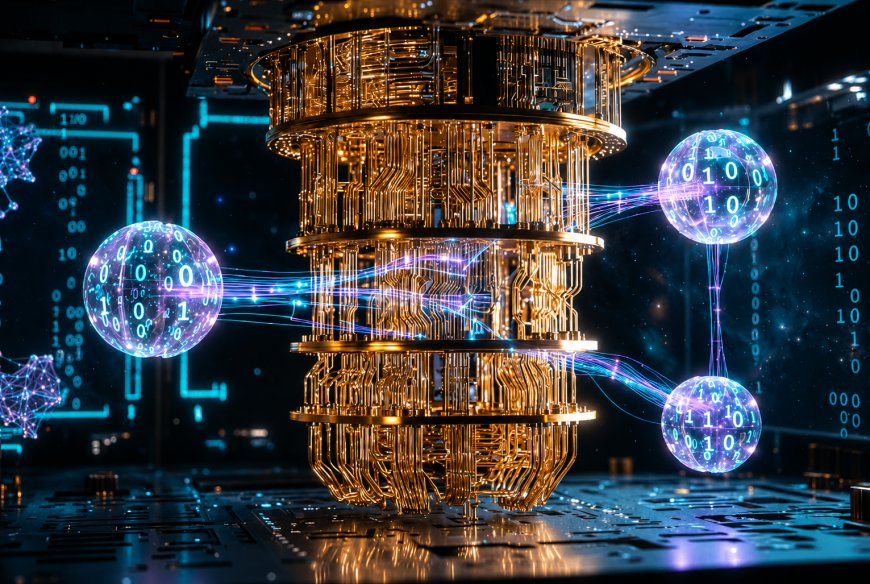
Quantum Computing Explained: Demystifying the Tech That’s About to Reshape Our World
Imagine a computer that doesn’t just crunch numbers one by one but explores millions of possibilities simultaneously. That’s not science fiction—it’s quantum computing in 2026, moving rapidly from labs to real-world impact.
The Basics: Classical vs. Quantum
- Classical Computers (your laptop/phone): Use bits – either 0 or 1.
- Quantum Computers: Use qubits – can be 0, 1, or both at once thanks to superposition. Qubits can also be entangled, linking their states instantly across distances, and leverage interference to amplify correct answers while canceling wrong ones.
This allows quantum machines to tackle problems impossible for even the world’s fastest supercomputers, like simulating complex molecules for new drugs or optimizing massive logistics networks.
Hot 2026 Trends Making Headlines
- Hybrid Quantum-Classical Computing The most practical approach today. Quantum processors handle the hardest sub-problems while classical computers manage the rest. Companies are deploying hybrid systems for near-term value in finance, logistics, and AI.
- Error Correction Breakthroughs Qubits are extremely sensitive to noise. 2026 has seen significant advances in quantum error correction codes, bringing fault-tolerant quantum computing closer to reality.
- Quantum Advantage Achievements Systems like Google’s Willow and others have demonstrated clear quantum advantage — performing tasks in minutes that would take classical computers thousands of years.
- Quantum AI Integration Quantum machine learning models are accelerating training times and improving pattern recognition in complex datasets.
- Post-Quantum Cryptography With “Q-Day” (when quantum computers can break current encryption) approaching, governments and industries are rapidly adopting quantum-resistant algorithms.
Real-World Applications Exploding in 2026:
- Faster drug discovery & materials science
- Portfolio optimization in finance
- Supply chain & logistics breakthroughs
- Secure communications
Quantum won’t replace your laptop—it’s a specialized powerhouse for the hardest problems.
The future is quantum-centric.
Traditional computers process information using bits that are strictly 0 or 1. Quantum computers use qubits that can exist in multiple states simultaneously. This fundamental difference allows quantum systems to solve certain complex problems exponentially faster than even the most powerful supercomputers.
Key Quantum Principles:
- Superposition: A qubit can represent both 0 and 1 at the same time, enabling massive parallel computation.
- Entanglement: Qubits can become linked so that the state of one instantly influences another, regardless of distance. This creates powerful correlations used in quantum algorithms.
- Interference: Quantum algorithms use wave-like interference to amplify correct solutions and cancel out incorrect ones.
These properties make quantum computers ideal for problems involving enormous combinations, such as molecular simulations, optimization challenges, and cryptography.
Challenges Still Ahead
Despite rapid progress, quantum computers remain expensive, require extreme cooling (near absolute zero), and are not yet suitable for everyday tasks. They will complement rather than replace classical computers.
The Road to 2030 and Beyond
Experts predict we’ll see the first practical, large-scale quantum applications by the end of this decade. The race between tech giants (Google, IBM, Microsoft, Amazon, Rigetti) and national initiatives (US, China, EU) is intensifying.
Bottom Line: Quantum computing is moving from theory to tangible impact. Understanding it today gives you an edge in tomorrow’s technology-driven world.
What's Your Reaction?
 Like
8
Like
8
 Dislike
0
Dislike
0
 Love
4
Love
4
 Funny
0
Funny
0
 Angry
0
Angry
0
 Sad
0
Sad
0
 Wow
0
Wow
0