

































The Dawn of Autonomous AI in 2026: Agentic Systems Redefining the Future of Intelligence and Work
Explore the explosive rise of Autonomous AI in 2026. Discover agentic AI trends, real-world applications, benefits, challenges, and how businesses can prepare for self-operating intelligent systems that execute complex tasks independently. Perfect for leaders embracing the next AI revolution.

Introduction to the Autonomous AI Revolution
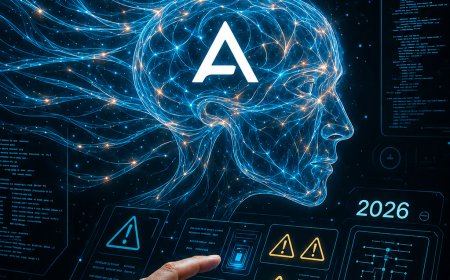
The year 2026 represents a monumental inflection point in artificial intelligence. While 2023–2025 were dominated by the wow-factor of generative AI — tools that create text, images, and code on demand — the focus has decisively shifted to Autonomous AI. These advanced systems, often referred to as agentic AI, go far beyond responding to prompts. They possess the ability to perceive their environment, reason through goals, plan multi-step actions, adapt to new information in real-time, and execute tasks with high levels of independence.
Industry leaders and analysts agree: experimental AI is concluding, and the era of truly autonomous, action-oriented intelligence has begun. Organizations are moving from chatbots and copilots to digital workforces that handle entire workflows — from research and decision-making to execution across software systems and physical robots.
What Exactly Is Autonomous AI?
Autonomous AI refers to AI entities (agents) that operate with goal-directed autonomy. Unlike traditional AI that requires constant human direction, these systems:
- Break down complex objectives into actionable steps
- Interact with external tools, APIs, databases, and other agents
- Learn from outcomes and self-correct
- Maintain context over long periods
- Collaborate in multi-agent ecosystems
Major Trends Shaping Autonomous AI in 2026
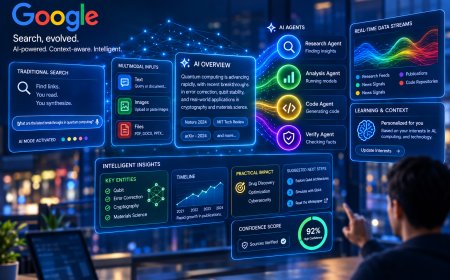
- The Shift to Agentic & Multi-Agent Architectures Single AI agents are evolving into sophisticated teams. Multi-agent systems (MAS) allow specialized agents to divide labor — one for research, another for analysis, a third for execution — mimicking human teams but operating at superhuman speed and scale.
- Enterprise Adoption at Scale Gartner predictions indicate that by the end of 2026, around 40% of enterprise applications will incorporate purpose-built AI agents. This transforms software from passive tools into proactive systems that anticipate needs and orchestrate outcomes.
- Physical AI and Embodied Intelligence Autonomous systems are bridging the digital and physical worlds. Expect widespread deployment in autonomous vehicles, industrial robotics, drones, and smart wearables that make real-world decisions independently.
- AI Workflows vs. Pure Autonomy While fully independent agents capture headlines, the practical winner in enterprises is reliable, verifiable AI workflows. These combine human oversight at critical points with autonomous execution for repetitive or data-heavy tasks.
- Security, Governance, and Trust As agents gain more access and power, built-in autonomous security becomes essential. AI agents now monitor for threats, ensure compliance, and maintain audit trails automatically.
Real-World Applications and Benefits
- Business Operations: Autonomous agents handle customer support escalation, supply chain optimization, financial reporting, and HR processes.
- Software Development: AI engineers that write, test, debug, and deploy code with minimal supervision.
- Personal Productivity: Background agents that manage schedules, research topics, draft communications, and follow up on tasks.
- Healthcare & Research: Agents that analyze medical data, simulate drug interactions, or coordinate multi-disciplinary research teams.
- Government & Public Services: Scaling autonomous processing for procurement, citizen services, and regulatory compliance.
Benefits Include:
- Dramatic productivity gains (teams achieving 3–10x efficiency in certain workflows)
- 24/7 operation without fatigue
- Reduced operational costs
- Faster innovation cycles
- Better work-life balance for humans focusing on high-value creative work
Challenges and Considerations
While promising, autonomous AI brings challenges around reliability, ethical decision-making, accountability, data privacy, and integration with legacy systems. Successful adoption requires strong governance frameworks, human-in-the-loop safeguards, and continuous monitoring.
How to Prepare Your Organization for Autonomous AI
- Start with well-defined, repeatable workflows.
- Invest in robust data infrastructure and APIs.
- Build cross-functional teams combining AI engineers, domain experts, and ethicists.
- Pilot small-scale agent deployments before full rollout.
- Prioritize transparency and explainability in agent decisions.
Conclusion 2026 is not just another year of AI advancement — it is the year intelligence becomes truly autonomous. Organizations that embrace agentic systems today will lead tomorrow’s economy. The future belongs to those who partner effectively with self-operating AI rather than merely using it as a tool.
What's Your Reaction?
 Like
0
Like
0
 Dislike
0
Dislike
0
 Love
0
Love
0
 Funny
0
Funny
0
 Angry
0
Angry
0
 Sad
0
Sad
0
 Wow
0
Wow
0