
































AI-Native Cloud Computing: The 2026 Revolution Reshaping Every Business Short Heading:
AI-Native Cloud Computing Trends 2026 | FinOps, Serverless & Multi-Cloud Power

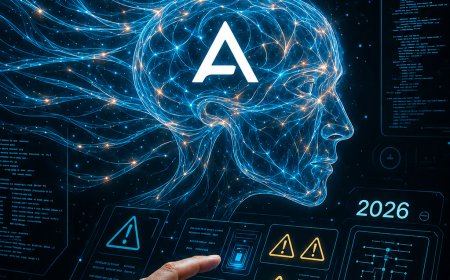
In 2026, cloud computing is no longer just about storage, servers, or scalability — it has become the living nervous system of artificial intelligence. The biggest shift happening right now is the rise of AI-native cloud platforms. Hyperscalers like AWS, Microsoft Azure, and Google Cloud are no longer simply offering AI tools on top of traditional infrastructure. They are rebuilding the entire cloud stack from the ground up for AI workloads.
Every major enterprise is racing to deploy GPU and TPU clusters, managed AI training pipelines, and agentic systems that can reason, act, and scale automatically. Serverless computing has evolved into the default runtime for AI agents. Developers no longer manage servers; they simply write intelligent functions that spin up, process data, and disappear — paying only for the exact compute used.
FinOps has matured from a cost-cutting exercise into a strategic discipline. Organizations now treat AI infrastructure spend with the same rigor as product strategy. Dedicated FinOps teams sit inside engineering groups, continuously optimizing GPU utilization, right-sizing clusters, and forecasting AI-related cloud bills that can spiral out of control overnight.
Multi-cloud and hybrid architectures are no longer optional. Companies are deliberately spreading workloads across AWS, Azure, Google Cloud, and private or sovereign clouds to avoid vendor lock-in, meet data residency rules, and maintain resilience. Edge Kubernetes is blurring the line between central cloud and the network edge, bringing ultra-low latency AI inference closer to users and devices.
Confidential computing and digital provenance are rising fast as trust becomes the new currency. Businesses want cryptographic guarantees that their sensitive data stays protected even while being processed by third-party AI models. At the same time, preemptive cybersecurity platforms are learning to detect threats before they materialize inside these complex, AI-driven environments.
The result? Cloud is transforming from a utility into the operating system of the AI era. Companies that treat cloud as a passive infrastructure will fall behind. Those who treat it as an intelligent, adaptive, value-creating platform will pull ahead dramatically.
What began as a way to rent servers and storage has evolved into the intelligent backbone of the entire digital economy. The defining trend of this year is the rise of the AI-native cloud — infrastructure that is no longer designed merely to support artificial intelligence, but is fundamentally rebuilt around it.
Hyperscalers are investing unprecedented capital into purpose-built AI infrastructure. AWS, Microsoft Azure, and Google Cloud are racing to deliver denser GPU and TPU clusters, ultra-fast interconnects, and managed training environments that hide the complexity of distributed machine learning. These platforms now treat large language models, multi-agent systems, and real-time inference as first-class citizens rather than afterthoughts. The result is a new generation of cloud services where AI is not an add-on layer but the core operating model.
Serverless computing has matured into the preferred runtime for AI agents. Developers no longer provision servers, manage scaling policies, or worry about idle capacity. Instead, they deploy intelligent functions that automatically spin up when needed, process massive volumes of data or user requests, and shut down the moment the task is complete. This shift has dramatically lowered the barrier for startups and large enterprises alike, allowing teams to focus purely on business logic and agent behavior rather than infrastructure management.
FinOps has evolved far beyond simple cost tracking. In 2026 it has become a strategic discipline embedded inside engineering teams. Organizations now employ dedicated FinOps practitioners who continuously monitor GPU utilization, right-size clusters in real time, forecast AI-driven spend, and enforce governance policies that prevent budget overruns. With public cloud budgets frequently exceeding plans by double-digit percentages due to AI workloads, mature FinOps practices are no longer optional — they are a competitive necessity.
Multi-cloud and hybrid strategies dominate enterprise architecture. Nearly every large organization now runs workloads across at least two major public clouds plus private or sovereign environments. This approach reduces vendor lock-in, improves resilience against outages, and helps meet increasingly strict data residency and regulatory requirements. At the same time, edge computing and Kubernetes at the network edge are bringing AI inference closer to users and devices, delivering the ultra-low latency required for real-time applications in manufacturing, healthcare, autonomous systems, and retail.
Security and trust have become central to the AI-native cloud. Confidential computing technologies allow sensitive data to remain encrypted even while being processed by third-party models. Digital provenance systems track the origin and integrity of data and AI outputs. Preemptive cybersecurity platforms powered by AI itself detect and neutralize threats before they can exploit the complex, highly automated environments that characterize modern cloud estates.
Beyond the technology, the cultural shift is equally significant. Cloud is no longer viewed as a cost center or a utility. It is treated as a value-creation engine. Success metrics have moved from pure cost savings to measurable business outcomes delivered by AI-powered systems. Companies that once focused only on migration and optimization are now redesigning entire operating models around intelligent, adaptive cloud platforms.
Looking ahead, the winners of the next five years will be those who treat the cloud not as a place where workloads run, but as an intelligent, self-optimizing system that continuously learns, scales, and protects itself. The AI-native cloud is no longer emerging — it is already the new default. Organizations that embrace it fully will unlock unprecedented speed, efficiency, and innovation. Those that lag behind will find themselves competing with one hand tied behind their backs in an increasingly intelligent digital economy.
From startups launching their first AI products to global enterprises orchestrating thousands of autonomous agents, the message of 2026 is unmistakable: the future of business runs on AI-native cloud computing.
What's Your Reaction?
 Like
0
Like
0
 Dislike
0
Dislike
0
 Love
0
Love
0
 Funny
0
Funny
0
 Angry
0
Angry
0
 Sad
0
Sad
0
 Wow
0
Wow
0