



























Latest AI Trends in 2026: How Artificial Intelligence Is Quietly Rewiring Your Everyday Life
Discover the hottest AI trends of 2026 transforming daily life. From personal AI agents and hyper-personalized healthcare to smart shopping, emotional support, and seamless city travel—see how generative AI, agentic systems, and multimodal tools are becoming invisible helpers in your routine.
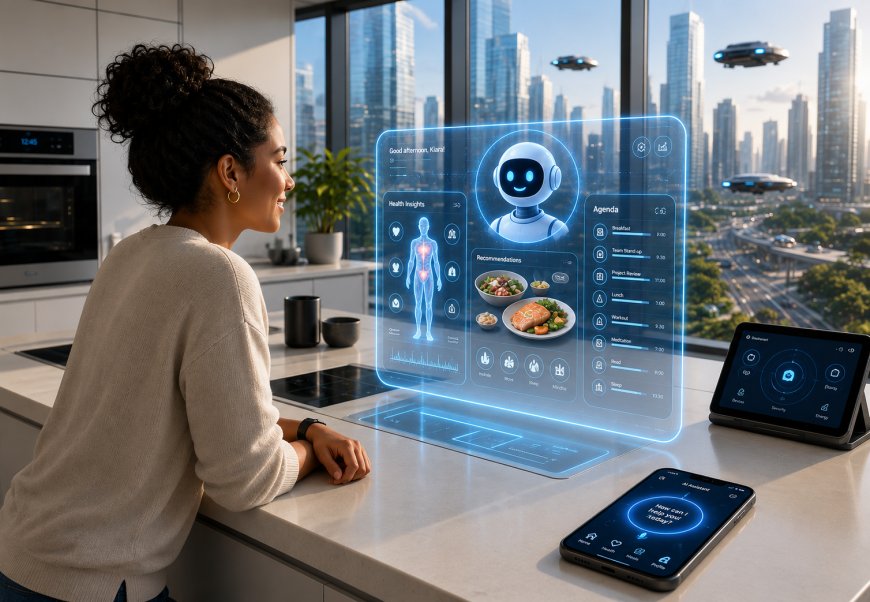
In 2026, artificial intelligence has moved far beyond the hype cycle and entered the quiet fabric of ordinary days. What once felt like science fiction is now the invisible infrastructure of modern living. Recent data from Forrester’s State of Gen AI and Consumers for 2026 shows that 62% of global users engage with generative AI at least weekly, while one in five online adults now turn to it every single day as their preferred “answer engine.” The technology has shifted from a novelty tool into an embedded cognitive partner that drafts messages, plans meals, manages schedules, offers emotional support, and even completes purchases without constant human prompting.
This transformation is not loud or dramatic. It happens in the background of morning routines, workdays, shopping trips, health check-ups, and evening wind-downs. Here is a deeper look at the most significant AI trends currently reshaping daily life in 2026:
1. Personal AI Agents Become True Daily Companions The biggest shift of the year is the rise of personal AI agents. These are no longer simple chatbots that wait for questions. They learn individual preferences, goals, routines, and even emotional patterns. Mark Zuckerberg has publicly predicted that billions of people will eventually use personal AI agents for financial planning, health management, relationship guidance, and household logistics.
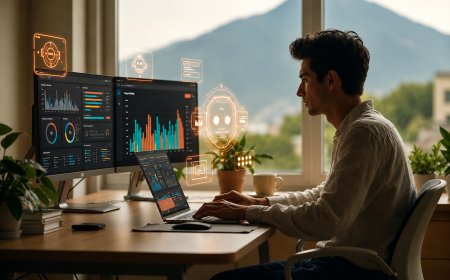
In practice, this means an agent that notices you have a busy week, automatically blocks focus time, suggests meal plans based on what’s left in the fridge, reorders supplies, and sends a gentle reminder about an upcoming health appointment. Many users report that the relationship feels increasingly intimate — people confide sensitive personal details because the AI remembers context across days and weeks. Early signs of AI-influenced commerce are already clear: roughly 28% of U.S. and 27% of U.K. online adults have made purchases with AI assistance.
2. Healthcare Becomes Deeply Personal and Predictive Healthcare stands out as one of the highest-impact applications. AI systems now flag risk patterns in medical scans almost the moment the image loads, catching details a tired human eye might miss. Personalized medicine — once confined to research labs — is moving into everyday care through early disease diagnostics, individual genetic insights, and tailored treatment recommendations.
AI medical scribes reduce administrative burden for doctors, freeing them to spend more time with patients. Wearable devices feed continuous data into systems that offer real-time wellness guidance. Tools connected to platforms like ChatGPT Health already serve tens of millions of people daily with personalized health information. The result is a quieter revolution: people feel more informed and proactive about their bodies without needing constant clinic visits.
3. Shopping That Anticipates Rather Than Reacts Online shopping has evolved from generic recommendation engines into systems that almost read intent. Modern AI factors in past purchases, browsing behavior, time of year, mood signals, and even personal values. Virtual try-ons and AI styling tools have made remote shopping feel precise rather than like a gamble.
Agentic commerce is emerging — AI that not only suggests products but can complete transactions within set parameters. Consumers increasingly use AI for product research, price comparisons, discount hunting, and even meal planning tied to grocery lists. The experience has shifted from “search and hope” to “ask and receive.”
4. Mobility and Cities Grow Smarter in Real Time Getting around cities is no longer the daily ordeal it once was. Predictive traffic systems and adaptive signals adjust themselves based on live conditions. Cab apps route more intelligently, reducing wait times. Public transport is beginning to shift schedules dynamically rather than sticking rigidly to fixed timetables.
Robotaxis continue expanding in more cities, offering fully autonomous rides alongside traditional traffic. The cumulative effect is less stress, shorter commutes, and a growing sense that the urban environment itself is responding to human needs rather than the other way around.
5. Emotional Support, Creativity, and the Rise of “Thinkslop” One of the most revealing trends is how people actually use AI in private moments. Therapy and companionship remain among the top everyday use cases. People turn to AI for relationship advice, decoding message subtext, general life guidance, and even light entertainment such as fan fiction or storytelling.
At the same time, researchers have identified a phenomenon called “thinkslop” — the tendency to outsource deeper thinking, opinion formation, or decision-making to AI. More than a quarter of top use cases involve asking the system to do some of the cognitive heavy lifting. The healthiest users treat AI as a collaborator that expands their thinking rather than a replacement for it. Fun and playful uses (nonsense conversations, creative experiments) have also risen, showing that AI is becoming both practical helper and entertainment companion.
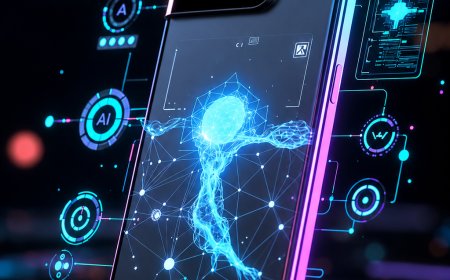
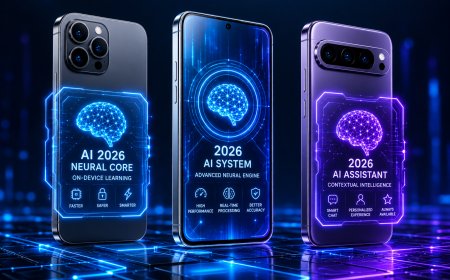
6. Multimodal and Edge AI Make Intelligence Feel Native By 2026, more than half of new deep-learning models are multimodal — able to process text, images, audio, and video together. People no longer need to type everything; they can speak, show a photo, or gesture. Edge AI running directly on smartphones and devices delivers faster, more private responses without constant cloud dependence.
This combination means AI lives inside the tools people already use: search engines that synthesize answers, home appliances that coordinate, phones that translate and create on the fly, and wearables that monitor health continuously. The technology feels less like a separate app and more like an ambient layer of intelligence.
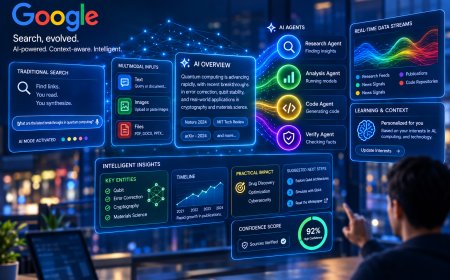
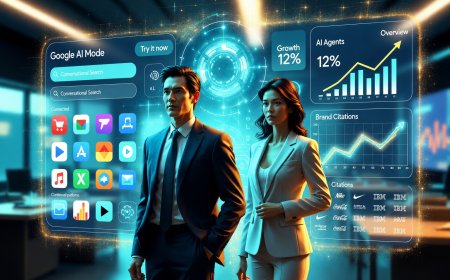
7. Embedded AI Overtakes Standalone Tools Deloitte’s predictions for 2026 highlight a major behavioral shift: most people now encounter generative AI inside existing applications (especially search engines) far more often than they open standalone chatbots. Accessing AI through a search result that synthesizes information is expected to be three times more common than using a dedicated tool.
This embedding makes the technology nearly invisible. AI note-takers join meetings automatically. Writing assistance appears inside email and document apps. Recommendation systems operate inside retail and entertainment platforms. The result is higher daily usage without users always realizing they are interacting with advanced AI.
The most important skill going forward may not be prompting perfection, but learning when to lean on AI and when to keep human judgment firmly in the driver’s seat. Those who master that balance will experience 2026 as a year of genuine daily enhancement rather than quiet dependence.
What's Your Reaction?
 Like
0
Like
0
 Dislike
0
Dislike
0
 Love
0
Love
0
 Funny
0
Funny
0
 Angry
0
Angry
0
 Sad
0
Sad
0
 Wow
0
Wow
0