





































NASA's Moon Base Era Begins: 3 Landmark Missions Launching in 2026 to Build Humanity's Permanent Lunar Home
Discover NASA's ambitious Moon Base initiative with three new robotic missions (Moon Base I, II, III) set for 2026 launches using Blue Origin, Astrobotic, and more. Following Artemis II's success, explore how these steps pave the way for long-term lunar exploration and Mars preparation.
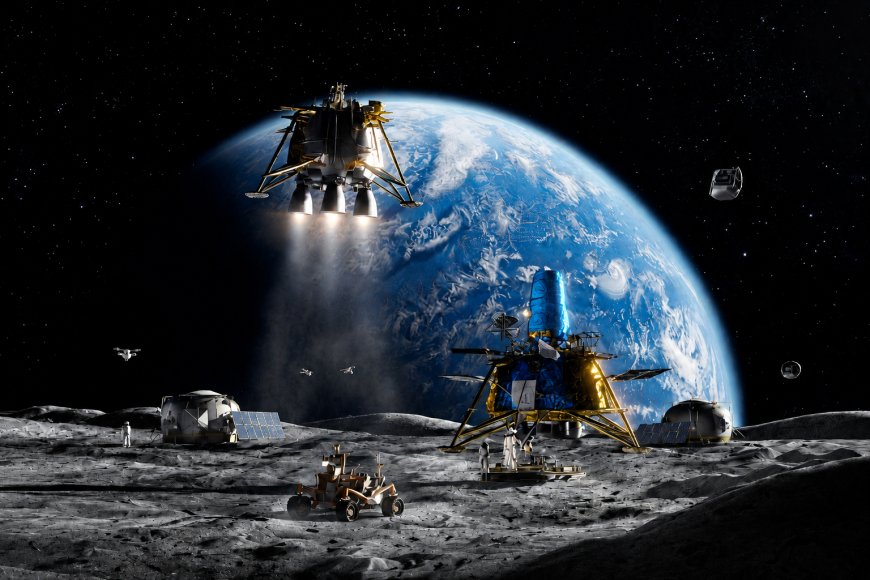
🌕 NASA Ignites the Moon Base Era: Three Robotic Missions Set to Transform Lunar Exploration in 2026
Just months after the exhilarating success of Artemis II – NASA’s first crewed mission beyond low Earth orbit in over 50 years – the agency is accelerating its timeline for a permanent human presence on the Moon. Launched on April 1, 2026, Artemis II carried astronauts Reid Wiseman, Victor Glover, Christina Koch, and Canadian Jeremy Hansen aboard the Orion spacecraft Integrity. The 10-day mission validated deep-space systems, broke distance records (reaching over 252,000 miles from Earth), conducted lunar observations of the far side, and inspired global audiences with its diverse crew and “Moon joy.”
Building on this momentum, NASA announced during its May 2026 updates three flagship Moon Base robotic missions, all slated for launch by the end of 2026. These form the cornerstone of Phase One (Now–2029) of the Moon Base program, announced at the “Ignition” event. The goal: Scout, test technologies, deliver cargo, and prepare the lunar South Pole region – rich in water ice and sunlight – for sustained operations, science, and eventual crewed habitats.
In-Depth Breakdown of the 2026 Moon Base Missions:
- Moon Base I (Target: Fall 2026) Blue Origin’s Blue Moon Mark 1 Endurance lander will deliver NASA science payloads to the Shackleton Connecting Ridge area. This mission focuses on technology demonstrations, resource prospecting (especially water ice), and environmental data collection critical for long-term stays. As the first in the series, it sets the foundation for infrastructure like power systems and landing precision.
- Moon Base II (2026) Pittsburgh-based Astrobotic’s Griffin lander will transport more than 1,100 pounds (over 500 kg) of cargo – the largest commercial payload delivery yet. Highlights include Astrolab’s FLEX rover, designed to mature mobility tech for future Lunar Terrain Vehicles (LTVs). This will enable autonomous exploration, astronaut support, and testing of roving capabilities across rugged terrain.
- Moon Base III (Late 2026) This mission carries the first PRISM (Payloads and Research Investigations on the Surface of the Moon) selections, including NASA’s Lunar Vertex to study mysterious lunar swirls (potentially linked to magnetic anomalies). International contributions from ESA and the Korean Space Agency add collaborative depth, expanding our understanding of lunar geology and resources.
Broader Moon Base Vision & Timeline: The program envisions up to 25 missions by 2029, including hopping drones (MoonFall) for agile surface mapping and additional landers. Phase Two (2029–early 2030s) ramps up infrastructure like power grids and habitats. By the mid-2030s, astronauts could live and work on the Moon for extended periods, using it as a proving ground for Mars. Partnerships with Blue Origin, Astrobotic, SpaceX, Intuitive Machines, and others drive commercial innovation while strengthening U.S. leadership.
Sky-High Astronomy Complement: Nancy Grace Roman Space Telescope Launching August 30, 2026, on a Falcon Heavy from Kennedy Space Center, Roman will revolutionize our view of the universe from Sun-Earth L2. With a massive field of view, it will hunt Earth-like exoplanets, map the Milky Way, and probe dark energy – perfectly timed to inspire alongside lunar achievements.
Ongoing NASA Highlights: Perseverance Rover’s Mars sample collection, JWST’s cosmic revelations, Hubble’s continued legacy, ISS spacewalks (like the upcoming US Spacewalk 95), and Expedition 74 crew operations keep the momentum alive daily.
Why These Missions Captivate the World: Water ice at the poles could provide drinking water, oxygen, and rocket fuel. Scientific returns include geology, heliophysics, and biology insights. Economically, they spur commercial space growth. Inspirationally, they represent humanity’s next giant leap – from visitors to settlers.
This is more than exploration; it’s the blueprint for our species’ future among the stars. Follow NASA for live updates as these historic landers touch down!
Call to Action: Share this with fellow space fans. Which mission excites you most – the rovers, science payloads, or Roman’s launch? Comment, like, and subscribe for more deep dives. Together, we reach for the Moon! 🌌🚀
delivery by 2029, transitioning from robotic scouting to crewed outposts. This builds directly on Artemis II’s success and prepares for Artemis III’s targeted crewed landing.
Not Just the Moon – Watch for the Nancy Grace Roman Space Telescope Launching as early as August 30, 2026 aboard a SpaceX Falcon Heavy, the Roman Telescope will offer a field of view 100x larger than Hubble’s. It promises revolutionary discoveries in exoplanets, dark energy, and the structure of the cosmos – complementing lunar efforts with deeper insights into our universe.
What's Your Reaction?
 Like
0
Like
0
 Dislike
0
Dislike
0
 Love
0
Love
0
 Funny
0
Funny
0
 Angry
0
Angry
0
 Sad
0
Sad
0
 Wow
0
Wow
0