

































The Unstoppable Rise: How Solar, Wind & Batteries Are Powering America’s Golden Age of Clean Energy in 2026
US Renewable Energy Boom 2026: Solar & Storage Dominate Despite Policy Shifts | Clean Energy Trends
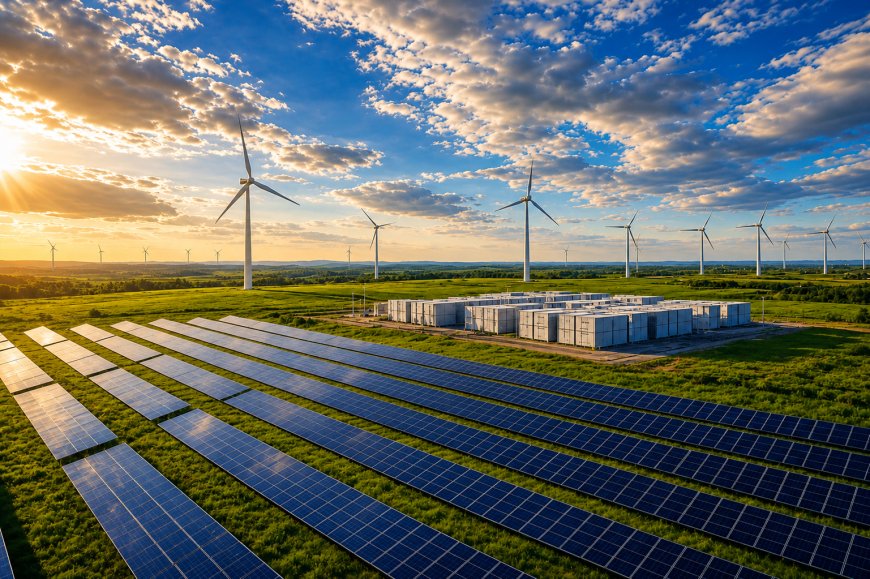
In 2026, something remarkable is happening across America’s power grids. Despite political headwinds and shifting federal policies, renewable energy is not just surviving — it’s thriving. Solar, wind, and battery storage are delivering nearly 90% of all new electricity capacity being added in the next 12 months. Renewables have already climbed past 30% of total US electricity generation in the first half of the year, while coal continues its steady decline and natural gas growth lags far behind.
The numbers tell a clear story. Utility-scale solar alone added nearly 28 GW in the past year, with rooftop and small-scale systems contributing another 6.6 GW. Wind projects, including major offshore and onshore developments, keep breaking ground. Battery storage is scaling faster than ever, pairing with solar to deliver reliable, dispatchable power that data centers and AI facilities desperately need.
What makes this moment unique is the dual force of pure economics and surging electricity demand. Solar and wind are now the cheapest sources of new electricity in most regions. At the same time, the explosive growth of artificial intelligence and hyperscale data centers is creating unprecedented power demand — and clean energy is answering the call. Investors have noticed: clean-tech funding hit $60 billion in the first half of 2026, and green energy indexes continue to outperform the broader market.
Globally the picture is even stronger. Solar PV capacity additions surpassed 600 GW worldwide in 2025, making it the largest installed power technology on the planet. China continues to lead, but the United States, Europe, India, and emerging markets are all accelerating. Forecasts show solar on track to overtake coal as the world’s top electricity source within the next six years.
This is no longer a story of distant climate goals. It’s a real-time energy transition driven by cost, reliability, and technology. Homeowners are installing rooftop solar and home batteries at record rates. Utilities are pairing solar farms with massive storage systems. Corporations are locking in long-term clean power deals to meet AI and manufacturing needs.
This is not a temporary spike driven by subsidies or political favor. It is the result of relentless cost declines, technological maturity, and a massive surge in electricity demand from artificial intelligence and data centers. Solar power has become so inexpensive that it is outcompeting almost every other option in most regions of the country. Utility-scale solar generation rose roughly 21% year-over-year, while coal generation fell nearly 11%. Wind and solar combined now produce 57% more electricity than coal. Over the twelve months ending in May 2026, utility-scale solar alone added nearly 28 gigawatts of capacity, with small-scale and rooftop systems contributing another 6.6 gigawatts.
Battery storage has emerged as the critical missing piece that turns intermittent renewables into reliable, dispatchable power. Storage costs have plummeted — more than three times lower than just three years ago — making solar-plus-storage projects highly competitive against gas peaker plants. Developers are racing to pair vast solar arrays with multi-hour battery systems capable of delivering clean power long after the sun sets. This combination is especially attractive to technology companies building energy-hungry AI data centers that require 24/7 reliability. Rising power demand from artificial intelligence has become an independent driver of renewable and storage investment, insulating the sector from policy turbulence.
Even in a challenging political environment, the market is speaking clearly. Cleantech companies attracted $60 billion in equity funding in the first half of 2026 — the strongest six-month period since the peak of the Inflation Reduction Act era. Green energy indexes continue to outperform broader markets. Major projects that began years earlier are now coming online, including some of the largest wind farms ever built in the United States. Offshore wind, though facing greater obstacles, still contributed hundreds of megawatts of new capacity this year.
The global picture reinforces the same story. Worldwide renewable capacity additions reached a record 800 GW in 2025, with solar photovoltaic accounting for more than three-quarters of that growth. Cumulative solar capacity has climbed to approximately 2,800 GW, making it the largest source of installed power generation capacity on the planet. China continues to lead with extraordinary deployment rates, but the United States, Europe, India, and a growing list of emerging markets are accelerating rapidly. Forecasts from leading energy analysts suggest solar is on track to overtake coal as the world’s primary source of electricity within the next six years.
What makes 2026 different is the shift from “clean energy as climate solution” to “clean energy as economic and reliability necessity.” Homeowners are installing rooftop solar and home batteries at record rates, driven by the desire to lower bills and gain energy independence. Businesses and manufacturers are locking in long-term power purchase agreements to hedge against price volatility and meet sustainability goals. Utilities are redesigning their grids to handle higher shares of variable renewables, investing in transmission upgrades, virtual power plants, and advanced forecasting tools.
Challenges remain — interconnection queues are long, supply chains face pressure, and certain policy changes have shortened timelines for tax credit eligibility. Yet the underlying economics are so strong that developers continue to push forward. In many cases, new renewable projects are simply cheaper to build and operate than the fossil alternatives. The result is a self-reinforcing cycle: lower costs drive more deployment, more deployment drives further cost reductions and technological improvements, and rising demand from electrification and AI keeps the pressure on for clean, scalable solutions.
Looking ahead, the next several years will likely see continued dominance of solar and storage, growing contributions from wind, and emerging roles for geothermal, advanced hydropower, and longer-duration energy storage technologies. The energy transition is no longer a distant aspiration. It is happening in real time, measured in gigawatts added every month, in rising shares of clean electricity on the grid, and in the quiet transformation of how America powers its homes, industries, and digital future.
This is the golden age of renewable energy — not because of perfect policy conditions, but because the technology, the economics, and the demand have finally aligned. The only real question left is how quickly the rest of the system can adapt to keep up.
The golden age of renewable energy isn’t coming — it’s already here. And the next chapter will be written by faster permitting, smarter grids, longer-duration storage, and continued innovation in solar efficiency and wind technology.
Whether you’re a homeowner looking to cut bills, a business planning for energy security, or an investor watching the clean energy markets, 2026 is the year renewables moved from alternative to essential.
What's Your Reaction?
 Like
0
Like
0
 Dislike
0
Dislike
0
 Love
0
Love
0
 Funny
0
Funny
0
 Angry
0
Angry
0
 Sad
0
Sad
0
 Wow
0
Wow
0