































Unlocking Tomorrow: 5G-Advanced to 6G – The Revolutionary Leap in Future Communication Networks
Discover the hottest 2026 updates on 5G-Advanced and 6G networks. Explore ultra-fast speeds, AI-native intelligence, integrated sensing, satellite integration, and how these technologies will transform industries, smart cities, and daily life. Stay ahead with expert insights on standardization and deployment timelines.

The Dawn of a Hyper-Connected Era: 5G-Advanced Powers 2026 While 6G Horizons Emerge
In 2026, the telecom world is buzzing with momentum. While 5G continues its global expansion—especially in emerging markets—5G-Advanced (powered by 3GPP Releases 19 and 20) is delivering tangible breakthroughs: multi-gigabit speeds, ultra-low latency enhancements, advanced MIMO, improved network slicing, XR/AR support, and deeper AI integration for intelligent resource management.
Operators are learning from 5G's rollout lessons, focusing on monetizable services, sustainability, and seamless evolution. At the same time, the industry is laying critical groundwork for 6G, with standardization efforts accelerating toward a 2029 target and commercial deployments eyed around 2030.
Key Trending Highlights in 2026:
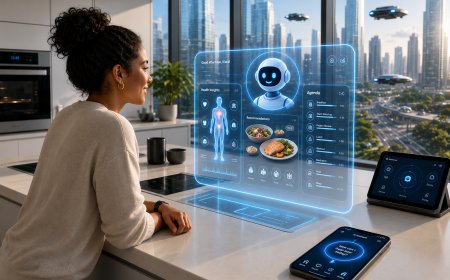
- AI-Native Networks: 6G will embed artificial intelligence at its core for self-optimizing, sensing, and immersive experiences—think real-time holographic communications, advanced robotics, and massive IoT ecosystems.
- Terahertz Speeds & Integrated Sensing: Expect up to 100x faster than 5G (potentially 100 Gbps+ to 1 Tbps), with networks that not only communicate but also "sense" the environment for applications like precise positioning, autonomous systems, and smart cities.
- Non-Terrestrial Networks (NTN) & Satellite Integration: Bridging gaps with satellite-to-device connectivity (e.g., Starlink synergies) for truly global, resilient coverage.
- Sustainability & Efficiency: Focus on energy-efficient designs and greener infrastructure to support exploding data traffic (forecasted to grow significantly by 2031).
Why It Matters Now: These advancements aren't just about faster downloads—they enable transformative use cases: remote surgery with sub-millisecond latency, fully immersive metaverses, AI-driven industrial automation, and connected everything from micro-sensors to vehicles.
Industry & Economic Impact These technologies will revolutionize multiple sectors:
- Smart Cities & Infrastructure: Real-time traffic management, energy optimization, and public safety.
- Healthcare: Tactile internet for remote procedures.
- Manufacturing & Industry 4.0: Fully connected factories with zero-downtime automation.
- Entertainment & Gaming: Seamless cloud XR and holographic communications.
- Autonomous Systems: Safer self-driving vehicles and drone operations.
Challenges Ahead: Higher-frequency spectrum in 6G brings coverage limitations, requiring dense infrastructure and intelligent hybrid solutions. Monetization of advanced use cases remains a key focus for operators.
5G-Advanced in 2026: Real-World Impact Today 5G-Advanced is no longer a future concept — it's delivering measurable improvements across networks. Key advancements include:
- Multi-Gigabit Speeds & Enhanced Capacity: Operators are achieving consistent multi-Gbps experiences with advanced MIMO, carrier aggregation, and better spectrum utilization (including upper 6 GHz bands in trials).
- Ultra-Reliable Low Latency: Critical for industrial automation, remote surgery, and real-time XR/AR applications.
- RedCap & Massive IoT Support: Reduced Capability (RedCap) devices are enabling cost-effective connectivity for billions of IoT sensors in smart factories, logistics, and agriculture.
- AI-Driven Network Intelligence: Self-optimizing networks that dynamically manage resources, reduce energy consumption, and improve user experience through predictive analytics.
- Integrated Sensing & Communication (ISAC): Early implementations allow networks to "sense" surroundings for applications like precise positioning, gesture recognition, and environmental monitoring.
Indoor 5G deployments are accelerating rapidly in enterprises, with stronger device compatibility and operator support making 5G the primary capacity layer for businesses.
6G: The AI-Native Future Taking Shape While commercial 6G is targeted for 2029–2030, 2026 is a pivotal year for standardization. 3GPP has set clear timelines: Release 21 (which includes initial 6G specifications) is progressing, with key freezes expected in 2027–2029. Major players like T-Mobile and Qualcomm are deepening collaborations for pre-commercial trials focused on AI-native capabilities, integrated sensing, and high-performance compute.
What's Your Reaction?
 Like
0
Like
0
 Dislike
0
Dislike
0
 Love
0
Love
0
 Funny
0
Funny
0
 Angry
0
Angry
0
 Sad
0
Sad
0
 Wow
0
Wow
0